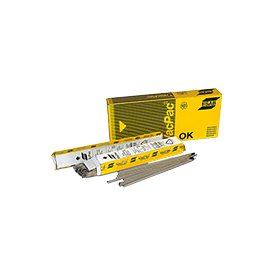
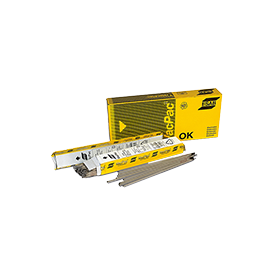
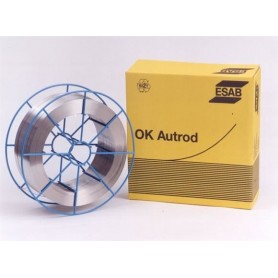
ESAB Aluminium WIRE OK Autrod 5183 DIAM. 1.2 7 kg spool
Aluminum wire alloyed with Magnesium/Manganese suitable for welding
of AlMg4.5Mn alloy

Aluminum wire alloyed with Magnesium/Manganese suitable for welding
of AlMg4.5Mn alloy
 Security policy
(edit with the Customer Reassurance module)
 Delivery policy
(edit with the Customer Reassurance module)
 Return policy
(edit with the Customer Reassurance module)
| As welded | |
| Impact Value | 67 ft-lb |
| Impact Value | 90 J |
| Test temperature | 68°F |
| Test temperature | 20 °C |
| Current | Voltage | Wire diameter | ||
| 140-260 A | 20-29 V | 1.2 mm (0.047 in.) | ||
| 180-210 A | 22-26 V | 1.2 mm (0.047 in.) | ||
| 125-150 A | 20-24V | 1.2 mm (0.047 in.) | ||
| 170-240 A | 24-28 V | 1.2 mm (0.047 in.) | ||
| 190-350 A | 25-30V | 1.6 mm (1/16 in.) | ||
| 240-300 A | 22-27 V | 1.6 mm (1/16 in.) | ||
| 190-260 A | 21-26 V | 1.6 mm (1/16 in.) | ||
| 290-340 A | 26-30V | 1.6 mm (1/16 in.) | ||
| 260-310 A | 22-27 V | 1.6 mm (1/16 in.) | ||
| 280-320 A | 24-28 V | 1.6 mm (1/16 in.) | ||
| 90-210 A | 15-26 V | 1.0 mm (0.040 in.) | ||
| Wire Electrode | SFA/AWS A5.10 : ER5183 EN ISO 18273 : S Al 5183 (AlMg4.5Mn0.7(A)) JIS Z3232 : A5183 |
| Approvals | For lots starting with RB: ABS ER 5183 BV WC CE EN 13479 CWB ER5183 (only for lots beginning with RB) : ClassNK KAl5RCG(I-1)(I-4) DB 61.039.03 DNV-GL 5183 JIS JIS Z3232 LR WC1/I-1,WC1/I-3 NAKS/HAKC 1.2-1.6mm RINA WC (*) VdTÜV 04666 |
| Approvals are based on factory location. Contact ESAB for more information. |
| Alloy type | AlMgMn |
| Wire Composition | ||||||||||||||
| To the | Cr | Who | Faith | mg | Mn | Yes | You | Zn | ||||||
| 94.200 % | 0.08 % | 0.01 % | 0.13 % | 4.9% | 0.65 % | 0.04 % | 0.100 % | 0.01 % | ||||||
OK Autrod 5183 was developed to provide the highest strengths possible in the as welded condition of alloy AA 5083 and other similar high magnesium alloys. The more common OK Autrod 5356 will typically fail to meet the as-welded tensile requirements of AA 5083. The alloy is typically used in marine and structural applications where high strengths, high fracture toughness for impact resistance and exposure to corrosive elements are important. The alloy is not recommended for elevated temperature applications due to its susceptibility to stress corrosion cracking. The alloy is non-heat treatable.